Wuthering Heights (2026) Movie Review: A Haunting Reimagining of Emily Brontë’s Gothic Masterpiece
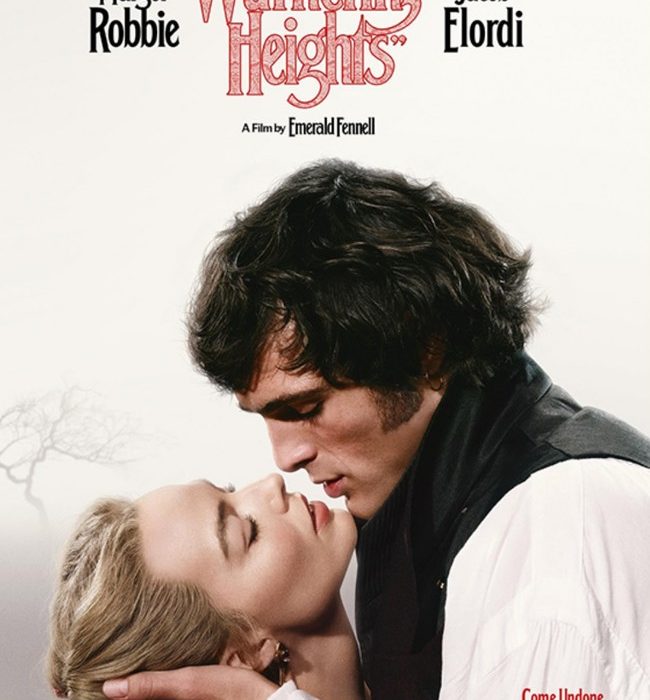
Wuthering Heights (2026) is a romantic gothic drama directed by Emerald Fennell, based on Emily Brontë’s classic 1847 novel of the same name. Starring Margot Robbie as Catherine Earnshaw and Jacob Elordi as Heathcliff, this 2026 adaptation revisits one of literature’s most turbulent love stories with operatic intensity and contemporary psychological insight.
With a reported runtime of approximately 130 minutes, the film reinterprets Brontë’s tale of passion, revenge, and generational trauma through a modern cinematic lens while preserving the bleak grandeur of the Yorkshire moors.
Film Overview
| Title | Wuthering Heights |
|---|---|
| Release Year | 2026 |
| Genre | Romantic Drama, Gothic |
| Director | Emerald Fennell |
| Based On | Wuthering Heights by Emily Brontë |
| Lead Cast | Margot Robbie, Jacob Elordi |
| Runtime | Approx. 130 minutes |
| Language | English |
Full Plot Synopsis
Set against the windswept Yorkshire moors of 19th-century England, Wuthering Heights (2026) traces the destructive romance between the brooding orphan Heathcliff and the spirited Catherine Earnshaw.
The story begins when Mr. Earnshaw adopts a mysterious boy, Heathcliff, and brings him to Wuthering Heights. Catherine, his daughter, forms a deep and unconventional bond with the outsider. Their connection is immediate and intense, rooted in shared rebellion and emotional defiance.
However, the rigid social structures of Victorian society soon intrude. Hindley Earnshaw, Catherine’s brother, resents Heathcliff and degrades him after their father’s death. Catherine, torn between passionate love and social ambition, ultimately chooses to marry Edgar Linton, a wealthy gentleman from Thrushcross Grange.
Heathcliff, heartbroken and humiliated, disappears—only to return years later transformed into a wealthy and calculating man. His return sets into motion a meticulous campaign of revenge that ensnares both families. He manipulates marriages, exploits emotional vulnerabilities, and perpetuates cycles of cruelty that extend to the next generation.
As Catherine’s health declines under the weight of emotional turmoil, the lovers’ reunion becomes a feverish confrontation between love and destruction. Catherine’s death does not end Heathcliff’s obsession; rather, it intensifies his fixation, turning the moors into a haunted landscape of grief and vengeance.
The film concludes with the younger generation attempting to break free from the sins of their parents, offering a subtle yet poignant suggestion of redemption amid generational ruin.
Direction and Vision: Emerald Fennell’s Gothic Sensibility
Emerald Fennell, known for her bold narrative style and thematic exploration of obsession and power dynamics, brings a distinct authorial signature to Wuthering Heights (2026). Rather than presenting a restrained literary adaptation, Fennell leans into the psychological volatility of the characters.
Her direction emphasizes emotional extremity. Long, lingering shots of the moors underscore isolation and spiritual desolation, while close-ups intensify moments of confrontation. The film’s pacing oscillates between lyrical stillness and explosive conflict, mirroring the unpredictability of Heathcliff and Catherine’s bond.
Fennell avoids romanticizing the toxicity at the heart of the story. Instead, she frames it as a study of emotional dependency and societal constraint, rendering the narrative disturbingly modern.
Performances: Margot Robbie and Jacob Elordi
Margot Robbie as Catherine Earnshaw
Margot Robbie delivers a layered performance as Catherine. She captures both the character’s wild independence and her devastating indecision. Robbie’s Catherine is neither victim nor villain; she is a woman trapped between desire and expectation.
Her portrayal emphasizes Catherine’s inner fragmentation. In intimate scenes, Robbie’s performance is raw and impulsive; in social settings, she reveals Catherine’s calculated composure. The emotional breakdowns feel earned rather than melodramatic, grounding the film’s heightened tone.
Jacob Elordi as Heathcliff
Jacob Elordi’s Heathcliff is magnetic and menacing. He portrays the character’s transformation from vulnerable outsider to ruthless avenger with chilling restraint. Elordi avoids caricature, instead presenting Heathcliff as a deeply wounded figure whose cruelty emerges from profound humiliation.
His physical presence—silent, watchful, simmering—creates a constant tension. In moments of confrontation, his performance becomes almost operatic, reinforcing the gothic atmosphere.
Cinematography and Production Design
The film’s visual language is central to its impact. Shot on location to emphasize the raw expanse of the moors, the cinematography embraces muted earth tones punctuated by candlelit interiors.
Visual Highlights
-
Sweeping landscape shots that underscore emotional isolation
-
Stark contrast between Wuthering Heights and Thrushcross Grange
-
Use of natural light to heighten realism
The production design faithfully reconstructs Victorian England while maintaining an aesthetic minimalism that prevents visual clutter. Costumes reflect class distinctions, reinforcing Catherine’s internal conflict between passion and social aspiration.
Screenplay and Thematic Depth
The screenplay condenses the novel’s layered narrative structure while preserving its emotional complexity. By focusing on the central relationship and its psychological repercussions, the film streamlines the story for modern audiences.
Major Themes Explored
-
Obsession and Possession – Love becomes indistinguishable from control.
-
Class and Social Mobility – Heathcliff’s marginalization fuels his vengeance.
-
Generational Trauma – Violence and resentment ripple across decades.
-
Nature vs. Civilization – The moors symbolize untamed emotion.
Fennell’s adaptation leans heavily into psychological realism, allowing dialogue to carry contemporary resonance without sacrificing period authenticity.
Strengths of Wuthering Heights (2026)
-
Powerful Lead Performances that elevate the tragic romance.
-
Atmospheric Cinematography that enhances the gothic mood.
-
Modern Thematic Relevance without betraying the source material.
-
Strong Directorial Identity that prevents the adaptation from feeling redundant.
Weaknesses of the Film
-
Intense Emotional Tone may feel overwhelming for some viewers.
-
Condensed Narrative Structure sacrifices certain secondary character arcs.
-
Pacing Variability could divide audiences accustomed to faster storytelling.
Comparison to Previous Adaptations
Unlike earlier versions that leaned into melodrama or literary fidelity, Wuthering Heights (2026) prioritizes psychological immersion. It positions itself not merely as an adaptation but as a reinterpretation shaped by contemporary discourse on power, gender, and emotional trauma.
This distinction makes the film feel urgent rather than nostalgic.
Cultural Impact and Awards Potential
Given its literary pedigree, high-profile cast, and auteur direction, Wuthering Heights (2026) positions itself as a major awards contender in categories such as:
-
Best Actress
-
Best Cinematography
-
Best Production Design
-
Best Adapted Screenplay
Its thematic resonance and visual ambition may also secure recognition in major international film festivals.
Final Verdict
Wuthering Heights (2026) is a visually arresting and emotionally intense adaptation that honors Emily Brontë’s gothic novel while reframing it for contemporary audiences. Anchored by compelling performances from Margot Robbie and Jacob Elordi, and guided by Emerald Fennell’s daring direction, the film embraces the story’s darkness rather than softening it.
While its unrelenting emotional weight may not appeal to every viewer, it stands as one of the most ambitious literary adaptations of the decade—an operatic meditation on love, revenge, and the cost of obsession.
Rating: 4 out of 5 stars