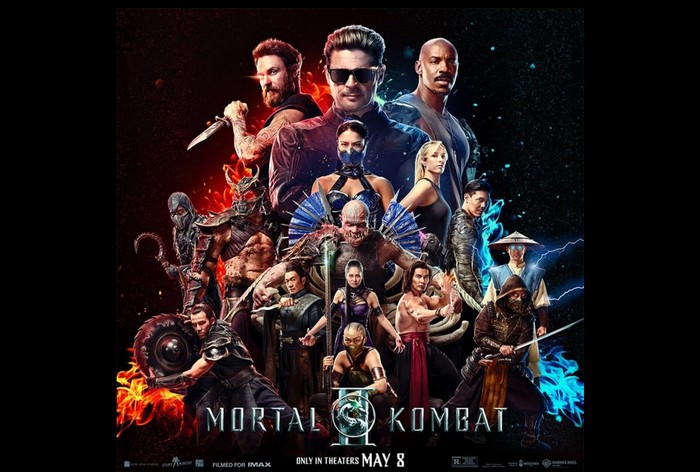
Mortal Kombat II (2026) Review: A Gory, Fan-Centric Spectacle That Doubles Down on Its Roots
The high-stakes world of Fatality and Flawless Victories returns to the big screen with Mortal Kombat II (2026). Following the commercial success of the 2021 reboot, director Simon McQuoid returns to the helm, bringing a sequel that is louder, bloodier, and more steeped in video game lore than its predecessor. With the addition of fan-favorite Johnny Cage and the arrival of the tyrannical Shao Kahn, this installment seeks to bridge the gap between cinematic storytelling and the visceral thrills of the arcade.
Movie Overview: Cast, Crew, and Production Details
| Category | Details |
| Release Date | May 8, 2026 |
| Director | Simon McQuoid |
| Lead Cast | Lewis Tan, Karl Urban, Adeline Rudolph, Jessica McNamee |
| Genre | Action / Martial Arts / Fantasy |
| Runtime | 115 Minutes |
| Screenplay | Jeremy Slater |
| Cinematography | Stephen F. Windon |
Full Plot Synopsis: The Tournament Begins
Picking up shortly after the events of the 2021 film, Mortal Kombat II finds Earthrealm’s champions in a desperate race to bolster their ranks. Cole Young (Lewis Tan) travels to Hollywood to recruit the narcissistic action star Johnny Cage (Karl Urban), whose ancient Mediterranean lineage grants him powers he barely understands.
The story shifts to the dark heart of Outworld, where the emperor Shao Kahn (Martyn Ford) has grown tired of Shang Tsung’s (Chin Han) failures. Kahn initiates the official Mortal Kombat tournament, a ritualistic contest governed by the Elder Gods. As the champions—including Sonya Blade (Jessica McNamee), Liu Kang (Ludi Lin), and Jax (Mehcad Brooks)—arrive in the desolate arenas of Outworld, they discover a web of political treachery.
The introduction of Princess Kitana (Adeline Rudolph) and the sorcerer Quan Chi (Damon Herriman) complicates the stakes. Kitana seeks to reclaim her throne from her adoptive father, Shao Kahn, while Quan Chi manipulates the souls of the dead in the Netherrealm. The film culminates in a brutal series of matches where the lines between hero and villain blur, leading to a final showdown between the combined forces of Earthrealm and the overwhelming power of the Emperor.
Detailed Critique: Fatalities and Franchise Building
Direction and Visuals
Simon McQuoid leans heavily into the “game” aesthetic for the sequel. While the 2021 film felt grounded in a gritty reality, Mortal Kombat II embraces the phantasmagoria of the source material. Locations like The Dead Pool and The Pit are rendered with vibrant, high-contrast visuals that pop on the screen. Cinematographer Stephen F. Windon (known for his work on the Fast & Furious franchise) brings a kinetic energy to the fight sequences, opting for wider shots that allow the audience to appreciate the choreography rather than the “shaky-cam” edits common in modern action.
Acting and Character Arcs
Karl Urban’s Johnny Cage is the undeniable heartbeat of the film. He provides the necessary levity to balance the self-serious mythology, delivering one-liners that land with the impact of a shadow kick. Lewis Tan delivers a more seasoned performance as Cole Young, though he occasionally feels overshadowed by the larger-than-life personalities of the game icons. Adeline Rudolph brings a regal yet lethal presence to Kitana, establishing herself as a pivotal player for future installments.
Themes and Screenplay
Written by Jeremy Slater, the screenplay focuses on themes of destiny versus choice. However, the narrative often takes a backseat to the action. The lore is dense—at times arguably too dense for casual viewers—with rapid-fire introductions of characters like Jade (Tati Gabrielle) and Sindel (Ana Thu Nguyen). While the world-building is expansive, it occasionally sacrifices character development for fan service.
Strengths & Weaknesses
Strengths
-
Stunt Work: The martial arts choreography is top-tier, featuring inventive uses of “Arcana” powers.
-
Fan Service: The film is packed with Easter eggs, iconic catchphrases, and “Stage Fatalities” that will delight long-time players.
-
Production Design: Outworld feels like a lived-in, dangerous world rather than just a CGI backdrop.
Weaknesses
-
Pacing: The middle act drags slightly under the weight of heavy exposition and multiple subplots.
-
Narrative Stakes: Because the film is so focused on setting up a third entry, some character deaths feel temporary or lack emotional weight due to the “Netherrealm” resurrection mechanics.
Final Verdict
Mortal Kombat II (2026) is exactly what it promises to be: a high-octane, R-rated martial arts extravaganza. It doesn’t aim for the prestige of a psychological drama; it aims for the jugular. While the plot is occasionally thin, the spectacle is undeniable. For fans of the franchise, it is a significant step up from the previous film, offering a more complete “Kombat” experience.
Final Grade: B-