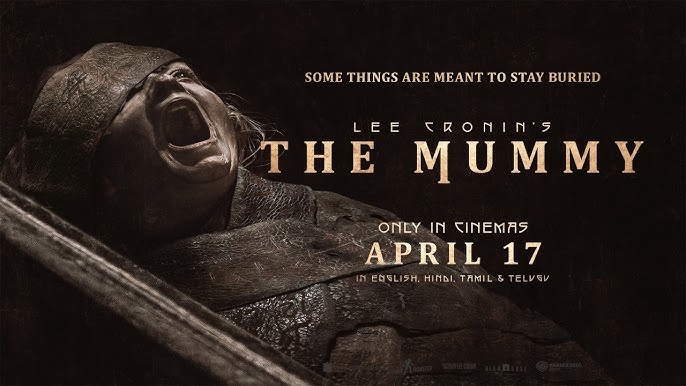
Lee Cronin’s The Mummy (2026) Review: A Brutal, Hard-R Resurrection of a Horror Icon
Director Lee Cronin, the mastermind behind the visceral Evil Dead Rise (2023), has officially unleashed his latest nightmare: Lee Cronin’s The Mummy. Eschewing the swashbuckling adventure of the Brendan Fraser era and the sterile action of the 2017 reboot, Cronin delivers a claustrophobic, “Hard-R” supernatural horror film that feels more like an exorcism than an archeological dig.
Produced by horror heavyweights James Wan (Atomic Monster) and Jason Blum (Blumhouse), this 2026 iteration aims to reclaim the Mummy as a symbol of pure, ancient dread.
Movie Overview: Lee Cronin’s The Mummy
| Category | Details |
| Release Date | April 17, 2026 |
| Director | Lee Cronin |
| Genre | Supernatural Horror / Psychological Thriller |
| Rating | R (for strong bloody violence, gore, and language) |
| Runtime | 135 Minutes (2h 15m) |
| Main Cast | Jack Reynor, Laia Costa, May Calamawy, Natalie Grace, Veronica Falcón |
| Studio | Warner Bros. Pictures / New Line Cinema / Blumhouse / Atomic Monster |
Detailed Plot Synopsis
The story follows Charlie Cannon (Jack Reynor), a journalist stationed in Cairo, and his wife Larissa (Laia Costa). Their lives are shattered when their young daughter, Katie, is lured away by a mysterious neighbor and disappears into a desert sandstorm without a trace.
Eight years later, the Cannon family has relocated to Albuquerque, New Mexico, attempting to heal with their new daughter, Maude, and Larissa’s religious mother (Veronica Falcón). The peace is broken when a call from the U.S. Embassy reveals that Katie (now played by Natalie Grace) has been found alive. She was discovered inside a 3,000-year-old sarcophagus following a mysterious plane crash.
However, the reunion is far from joyful. Katie returns in a catatonic, withered state, her skin resembling ancient papyrus. As she is brought home, the family realizes they haven’t just brought back their daughter—they’ve invited an ancient, parasitic evil into their suburban lives. Katie begins exhibiting disturbing, possession-like symptoms: wall-crawling, consuming insects, and speaking in dead tongues. With the help of an Egyptian artifact expert, Zaki (May Calamawy), the family must confront a “mummy” that functions less like a monster in bandages and more like a generational curse intent on consuming their bloodline.
Comprehensive Film Analysis
Direction and Vision
Lee Cronin continues to establish himself as a premier architect of “contained” horror. Much like the high-rise setting of Evil Dead Rise, Cronin utilizes the Cannon family home as a pressure cooker. His direction is unflinching, often lingering on the physical transformation of the “Mummy” in ways that are deeply uncomfortable. He successfully pivots the franchise away from “Action-Adventure” and back into the “Universal Monsters” horror roots, albeit with a modern, mean-spirited edge.
Performance and Character Arc
Jack Reynor and Laia Costa provide the emotional anchor necessary for a film this bleak. Their performances as grieving parents who are forced to fear the child they once mourned are nuanced and harrowing.
However, the standout is Natalie Grace. Her physical performance as the returned Katie is nothing short of terrifying. She manages to convey an ancient malice through jerky, unnatural movements and a hollowed-out gaze that rivals the most iconic horror antagonists. May Calamawy brings a much-needed authoritative presence as Zaki, providing the lore and cultural context that grounds the supernatural elements in Egyptian mythology.
Visuals and Practical Effects
In an era of CGI-heavy blockbusters, Lee Cronin’s The Mummy shines through its commitment to practical effects. The “Mummy” design is a masterclass in body horror—viscous, dusty, and decaying. The cinematography by Dave Garbett uses a palette of scorched ambers and oppressive shadows, making the New Mexico desert feel as ancient and unforgiving as the Sahara.
Sound and Score
The score by Stephen McKeon is discordant and heavy on percussion, utilizing traditional Egyptian instruments distorted through modern synthesis. The sound design is particularly aggressive; the “wheezing” sound of the Mummy and the wet, cracking noises of its movements provide a layer of sensory horror that persists long after the credits roll.
Strengths and Weaknesses
Strengths
-
Originality: A fresh take on a tired IP that focuses on psychological and domestic horror.
-
Gore Factor: For fans of Cronin’s previous work, the “Hard-R” violence is creative and visceral (including a standout scene involving a pedicure).
-
Atmosphere: The film maintains a relentless sense of dread from the opening frame.
-
Practical Effects: Exceptional makeup and creature design that outclasses the 2017 reboot.
Weaknesses
-
Pacing: At 135 minutes, the second act feels slightly overextended as the family bickers about Katie’s condition.
-
Familiar Tropes: At times, the film leans heavily into “Possession” cliches that make it feel more like The Exorcist than a traditional Mummy film.
-
Bleakness: The tone is so relentlessly grim that it may alienate audiences looking for the levity found in the 1999 classic.
Final Verdict
Lee Cronin’s The Mummy is a triumph of modern horror and a necessary course correction for the franchise. It is a grueling, expertly crafted descent into madness that prioritizes scares over spectacle. While it may be too intense for casual viewers, horror aficionados will celebrate it as one of the most effective monster movies of the decade. Cronin has successfully resurrected a legend—and made it genuinely scary again.
Rating: 4/5 Stars