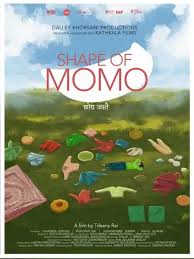
The Shape of Momo (2026) Movie Review: A Masterful, Multigenerational Portrait of Womanhood and Resistance
Independent South Asian cinema has long been a vessel for localized storytelling that yields universal emotional truths. Tribeny Rai’s remarkable feature debut, Shape of Momo (originally titled Chhora Jastai), stands as a towering testament to this tradition. Co-produced between India and South Korea, this Nepali-language film first captured international attention at its world premiere at the 30th Busan International Film Festival in late 2025—where it clinched the Songwon Vision Award and the Taipei Film Commission Award. Following a highly decorated festival run, including the prestigious Golden Royal Bengal Tiger Award at the Kolkata International Film Festival and a nomination for the 2026 Ingmar Bergman International Debut Award, the film secured its wide theatrical release on May 29, 2026.
Rai, an alumna of the esteemed Satyajit Ray Film and Television Institute (SRFTI), uses her premier feature to dissect the quiet, calcified patriarchal infrastructure of rural Sikkim. The result is a slow-burning, aesthetically rigorous, and profoundly empathetic character study that positions Rai as an essential new voice in contemporary global cinema.
Technical Overview and Production Details
For search engines and film archivists mapping out the production footprint of this indie sensation, the primary technical and credit specifications are compiled below:
| Attribute | Details |
| Title | Shape of Momo (Original Title: Chhora Jastai) |
| Director | Tribeny Rai |
| Screenplay | Kislay, Tribeny Rai |
| Principal Cast | Gaumaya Gurung, Pashupati Rai, Shyama Shree Sherpa, Rahul Mukhia |
| Cinematographer | Archana Ghangrekar |
| Lead Editors | Anil Aalayam, Kislay |
| Music Composer | Mikhail Marak |
| Production Houses | Dalley Khorsani Production, Kathkala Films, Aizoa Pictures |
| Global Sales Agent | Celluloid Dreams |
| Running Time | 114 minutes |
| Primary Language | Nepali |
| Theatrical Release Date | May 29, 2026 (India) |
Full Plot Synopsis
Shape of Momo tracks the internal and external homecoming of Bishnu (played with a steely, internal gravity by Gaumaya Gurung), a 32-year-old university-educated woman who abruptly quits her corporate job in the hyper-kinetic metropolis of Delhi to return to her ancestral mountain village in East Sikkim. Escaping the modern burnout of the city, Bishnu harbors romanticized notions of reshaping her destiny in the domestic space, specifically plotting to convert her mother’s traditional home into an independent homestay business.
However, her arrival immediately plunges her into an intergenerational matrix of female endurance and silent compromise. The household lacks active male authority, yet it remains completely governed by patriarchal conditioning. Awaiting Bishnu is her elderly grandmother (Bhanu Maya Rai), who spends her days in a state of suspended animation, waiting for her absent son in Dubai to return and rescue her. Bishnu’s mother, Devika (Pashupati Rai), is a woman defined by her apathy and complete submission to daily labor, carrying the household on her back without ever questioning the unfair parameters of her existence.
The domestic friction intensifies when Bishnu’s younger sister, Junu (Shyama Shree Sherpa), returns home seeking refuge. Heavily pregnant and fleeing severe marital discord at her in-laws’ residence, Junu adds an acute layer of temporal urgency to the environment.
As Bishnu attempts to navigate her business plans, she faces systemic resistance from village elders and financial institutions that look askance at an unmarried woman seeking fiscal autonomy. Her journey is further complicated by a tentative, blossoming romance with Giyan (Rahul Mukhia), a progressive local architect. Giyan represents a potential departure from the toxic masculinity of the village, yet even his modern sensibilities eventually clash with Bishnu’s rigid demand for complete personal sovereignty.
The narrative builds not toward explosive cinematic melodrama, but through a series of micro-aggressions, communal cooking rituals, and domestic negotiations. Bishnu is forced to confront the painful realization that liberation cannot be achieved individually when the women surrounding her choose comfort in their historical subjugation.
Comprehensive Cinematic Analysis
Themes: The Title as a Domestic Metric
The central metaphor of the film resides in its deceptive title. The preparation of momos—the ubiquitous steamed dumplings of the Himalayan region—is treated not as a tourist novelty, but as a grueling domestic metric of female perfection. The script, co-written by Rai and Kislay, subtly illustrates how a woman’s value in this society is judged by the uniformity, aesthetics, and structural integrity of the food she folds. The “shape of a momo” becomes a structural cage, symbolizing the neat, unyielding parameters into which young women must squeeze their ambitions.
Rai masterfully explores the concept of “unbelonging.” Having tasted the secular freedoms of Delhi, Bishnu belongs neither to the urban elite nor to her rural origins. Her crusade to “uplift” her mother and sister is initially met with cold indifference. The film bravely asserts that systemic oppression often creates a defense mechanism of apathy within the oppressed, framing Bishnu’s progressive ideals as disruptive western intrusions rather than salvation.
Performance and Acting
The emotional ballast of Shape of Momo rests on its extraordinary female ensemble. Gaumaya Gurung delivers a masterclass in minimalist acting. She avoids the pitfalls of the typical “rebellious heroine” archetype, choosing instead to portray Bishnu with a mix of intellectual arrogance, deep exhaustion, and vulnerable yearning. Her performance is anchored by her expressive eyes, which register the slow deflation of her idealistic dreams.
Pashupati Rai, a veteran of independent South Asian cinema, turns in a devastating performance as the mother. The chemistry between Gurung and Rai accurately mirrors the tragic friction that exists between a generation that endured in silence and a generation that demands answers. Shyama Shree Sherpa provides the perfect foil as the pregnant Junu, embodying the terrifying reality of a young woman caught in the transition between systemic compliance and sudden flight.
Direction and Visual Style
Tribeny Rai’s direction is characterized by extreme patience, compositional rigor, and an observational gaze heavily indebted to the masters of slow cinema like Jia Zhangke and Nuri Bilge Ceylan. Working alongside cinematographer Archana Ghangrekar, Rai eschews the typical postcards of the Himalayas. Instead of wide, sweeping mountain vistas that romanticize the terrain, Ghangrekar shoots Sikkim with a dual register. The landscape is visually stunning but compositionally framing—often shooting characters through cramped doorframes, behind heavy wooden pillars, or trapped within low-ceilinged kitchens.
The camera remains stationary for long stretches, forcing the audience to sit with the characters during mundane tasks. This formal restraint transforms the beautiful topography into an oppressive, claustrophobic crucible.
Sound and Screenplay
Mikhail Marak’s sparse, naturalistic score avoids emotional manipulation. The sound design prioritizes the ambient reality of rural Sikkim—the howling mountain winds, the rhythmic chopping of vegetables, the crackle of firewood, and the distant, ominous rumbling of landslides. Silence is weaponized effectively, highlighting the vast communicative gulf between the three generations of women.
The screenplay, refined at various international labs including Clinik.Kathmandu and Filmlab South Asia, is razor-sharp. It avoids didactic, exposition-heavy dialogue. The characters speak in half-sentences and idioms, capturing the exact cadences of the Sikkimese-Nepali dialect while allowing subtext to do the heavy lifting.
Critical Evaluation: Strengths and Weaknesses
Strengths
-
Nuanced Feminism: The film completely rejects the simplistic “men are evil, women are perfect” binary, showing how women actively participate in policing and maintaining patriarchal structures.
-
Stunning Visual Grammar: Archana Ghangrekar’s cinematography avoids travelogue aesthetics to find a deeply melancholic, claustrophobic beauty within the domestic sphere.
-
Flawless Ensemble Cast: The organic performances of the lead actresses lend the film an almost documentary-like authenticity.
-
Cultural Specificity: It offers a rare, unflinching look at the socio-economic realities of Sikkim, a region seldom explored with such cinematic gravity.
Weaknesses
-
Deliberate Pacing: The film’s adherence to slow cinema conventions and its 114-minute runtime may test the patience of viewers accustomed to traditional narrative momentum.
-
Ambiguous Resolution: Audiences seeking clear, triumphant narrative closures may find the film’s open-ended, naturalistic conclusion somewhat frustrating.
Final Verdict
Shape of Momo is a triumph of independent cinema. Tribeny Rai has delivered a debut feature that is both unsparingly honest and deeply affectionate toward its characters. It strips away the superficial exoticism often mapped onto the Himalayan region to reveal a complex, beating heart of resistance. For cinephiles seeking profound, character-driven storytelling that mirrors the structural genius of international art-house cinema, this film is an unmissable event. It cements Tribeny Rai as an elite contemporary filmmaker to watch in 2026 and beyond.