


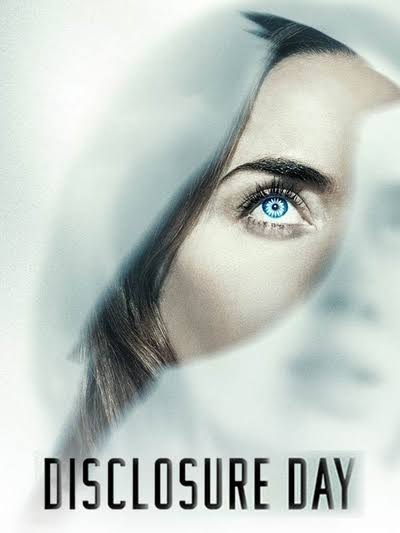
Steven Spielberg Returns to Sci-Fi Grandeur With ‘Disclosure Day’
Two decades after his harrowing 2005 adaptation of War of the Worlds, master filmmaker Steven Spielberg returns to his defining cinematic sandbox with Disclosure Day (2026). Reaming up with screenwriter David Koepp (Jurassic Park, Indiana Jones and the Kingdom of the Crystal Skull), Spielberg delivers a sweeping, intellectually rigorous science-fiction thriller that trades the apocalyptic destruction of generic alien invasion blockbusters for the tense, claustrophobic realities of geopolitical chess and institutional whistleblowing.
Disclosure Day shifts the focus away from explosive interstellar conflict, centering instead on a paranoid, algorithmic era where information is weaponized and the boundary between manufactured fiction and absolute truth is entirely eroded. The film serves as an elegant, multi-layered examination of how modern society would genuinely collapse—and rebuild—if the ultimate cosmic secret were exposed to the public.
Technical Overview: Cast, Crew, and Production Details
| Attribute | Production Detail |
| Director | Steven Spielberg |
| Screenplay | David Koepp |
| Story By | Steven Spielberg |
| Producers | Kristie Macosko Krieger, Steven Spielberg |
| Starring | Emily Blunt, Josh O’Connor, Colin Firth, Colman Domingo, Eve Hewson |
| Cinematography | Janusz Kamiński |
| Musical Score | John Williams |
| Editor | Sarah Broshar |
| Production Company | Amblin Entertainment |
| Distributor | Universal Pictures |
| Running Time | 145 Minutes |
| Budget | $115 Million |
Detailed Plot Synopsis: The Race to Unmask the Cosmos
The narrative of Disclosure Day unfolds across a tight, breathless timeline across several metropolitan hubs, anchored by two seemingly disparate protagonists who find their lives violently upended by the same global anomaly.
The Convergence of Two Whistleblowers
Margaret Fairchild (Emily Blunt) is an analytical broadcast meteorologist based in Kansas City. During a routine evening broadcast, Margaret notices unprecedented atmospheric anomalies—unexplainable thermal shifts and electromagnetic distortions—occurring across the Midwest. When her station’s feed is abruptly cut by federal intervention and her raw telemetry data is scrubbed from the local servers, Margaret realizes she has inadvertently documented something far more significant than a weather pattern.
Simultaneously, in Washington, D.C., Dr. Daniel Kellner (Josh O’Connor) works as a brilliant elite cyber-security analyst for WARDEX, an ultra-classified, black-budget intelligence agency operating outside congressional oversight. While tracing an unexplained digital intrusion into deep-space communication arrays, Daniel stumbles upon heavily encrypted legacy files dating back decades. The decoded telemetry confirms a terrifying reality: verified, sustained physical contact between human governments and non-human intelligences.
The Iron Fist of WARDEX
As Daniel attempts to extract the data, his actions trigger internal security protocols overseen by Noah Scanlon (Colin Firth), the calculating, cold-blooded director of WARDEX. Scanlon views absolute secrecy not as a political preference, but as an existential necessity to maintain global economic and theological stability. Realizing his life is forfeit, Daniel flees the facility with a decrypted drive containing the definitive proof of extraterrestrial visitation.
[Atmospheric Anomaly] ---> [Margaret Discovers Data Interception] \
                                                                   ---> [The Alliance] ---> [The Disclosure Event]
[WARDEX Data Leak]     ---> [Daniel Steals Deep-Space Telemetry] /
Daniel’s flight leads him to cross paths with Margaret, whose public questioning of the atmospheric incident has made her a prime target for WARDEX stabilization teams. Recognizing that neither can survive alone against the surveillance apparatus of the state, they seek out Hugo Wakefield (Colman Domingo), a disgraced former WARDEX operations officer turned underground activist.
The Final Broadcast
Operating from a retrofitted, analog broadcasting compound hidden in rural New Jersey—immune to digital tracking—Hugo helps Margaret and Daniel prepare for “Disclosure Day”: a coordinated, un-hackable pirate broadcast designed to transmit the uncompressed alien telemetry to every television, satellite, and smartphone grid on Earth simultaneously.
The third act shifts into a high-stakes siege. While Scanlon’s tactical teams close in on their location, Margaret must draw upon her broadcasting experience to present the cosmic revelation to a global audience, forcing humanity to confront an immutable reality that power structures have hidden for generations.
In-Depth Critical Analysis
Themes: Truth, Power, and Existential Crisis
At its core, Disclosure Day is less about the alien entities themselves and more about the fragile architecture of human belief systems. Spielberg and Koepp expertly lean into contemporary anxieties regarding institutional distrust, misinformation, and data control.
The film highlights the psychological fallout of institutional deception. By framing the alien presence as an administrative secret rather than a physical threat, the screenplay poses an unsettling question: Who suffers more when a paradigm-shifting truth is revealed—the public, or the empires built on keeping them in the dark?
Directorial Vision and Screenplay
Steven Spielberg’s direction demonstrates a masterclass in tonal restraint. Eschewing the visceral, kinetic panic of War of the Worlds, he adopts a calculated, paranoid visual language reminiscent of 1970s political thrillers like All the President’s Men or Three Days of the Condor.
David Koepp’s screenplay is remarkably lean despite its 145-minute runtime. The dialogue balances dense scientific concepts, technical jargon, and profound bureaucratic dread without alienating the viewer. The pacing is deliberate, building tension through hushed arguments in dimly lit rooms and the quiet tap of computer keys rather than loud action set-pieces.
+-------------------------------------------------------------------------+
|                  Spielberg's Sci-Fi Evolution Matrix                    |
+------------------------------------+------------------------------------+
| E.T. / Close Encounters (Past)     | War of the Worlds (2005)           |
| - Optimistic, childlike wonder     | - Visceral, chaotic survival terror|
| - Interstellar kinship             | - Destructive physical invasion    |
+------------------------------------+------------------------------------+
|         --- [ DISCLOSURE DAY (2026) ] ---                               |
|         - Bureaucratic paranoia, data weaponization, systemic truth     |
+-------------------------------------------------------------------------+
Acting Performances
-
Emily Blunt (Margaret Fairchild): Blunt delivers an exceptional, grounded performance as the emotional and moral center of the film. She avoids the typical tropes of an action heroine, portraying Margaret with an everyday vulnerability mixed with an unyielding journalistic integrity.
-
Josh O’Connor (Dr. Daniel Kellner): O’Connor shines as the hyper-intelligent, anxiety-ridden analyst. His physical performance perfectly captures the immense weight of carrying a truth too large for one person to bear.
-
Colin Firth (Noah Scanlon): Firth is a revelation as the primary antagonist. He portrays Scanlon not as a cartoonish villain, but as a chillingly rational civil servant who genuinely believes that global chaos will ensue if the truth is dropped on an unprepared populace.
-
Colman Domingo (Hugo Wakefield): Domingo provides much-needed gravitas and world-weary charisma to the second half of the film, acting as the bridge between the technical and human elements of the conspiracy.
Visuals, Cinematography, and Sound
Longtime Spielberg collaborator Janusz Kamiński utilizes a distinct visual style for Disclosure Day. Moving away from his signature hyper-saturated, blown-out light flares, Kamiński employs a colder, muted color palette dominated by steel blues, institutional grays, and shadows. The cinematography emphasizes the scale of the institutions hunting the protagonists, often dwarfing Blunt and O’Connor within massive architectural frames.
The auditory landscape of the film is equally meticulous. The sound design leans into the low hum of servers, the click of analog switches, and the oppressive silence of empty rooms.
Legendary composer John Williams delivers a brilliant, minimalist score that diverges sharply from his iconic, sweeping themes for Close Encounters of the Third Kind. Williams relies on brooding strings, repetitive piano motifs, and unsettling electronic undertones that heighten the omnipresent sense of surveillance and impending revelation.
Strengths and Weaknesses
Strengths
-
Sophisticated Narrative: The narrative treats the audience with intelligence, focusing on the sociopolitical and psychological ramifications of alien disclosure rather than generic action.
-
Superb Ensembles: The central performances, particularly the ideological clash between O’Connor and Firth, elevate the script’s thematic weight.
-
Masterful Atmosphere: Kamiński’s cinematography combined with Williams’ understated score creates an incredibly immersive atmosphere of escalating tension.
-
Restraint Over CGI: Spielberg relies heavily on practical tension, set design, and character drama rather than over-saturating the screen with digital visual effects.
Weaknesses
-
Deliberate Secondary Pacing: The midsection of the film slows down considerably as the technical parameters of the final broadcast are established, which may test the patience of viewers expecting a traditional action blockbuster.
-
Ambiguous Resolution: Audiences seeking a definitive, visual look at the extraterrestrial beings may find the film’s conceptual conclusion somewhat frustrating, as Spielberg chooses to focus entirely on the human reaction to the data.
Final Verdict
Disclosure Day stands as Steven Spielberg’s most mature, reflective, and politically conscious science-fiction film to date. By treating the existence of extraterrestrial life as a volatile piece of classified data rather than an armada of descending ships, the film holds up a mirror to our current landscape of digital paranoia, structural corruption, and the desperate search for objective reality. Backed by exceptional performances from Emily Blunt and Josh O’Connor, it is a gripping, highly intellectual thriller that cements itself as a landmark cinematic achievement for 2026.