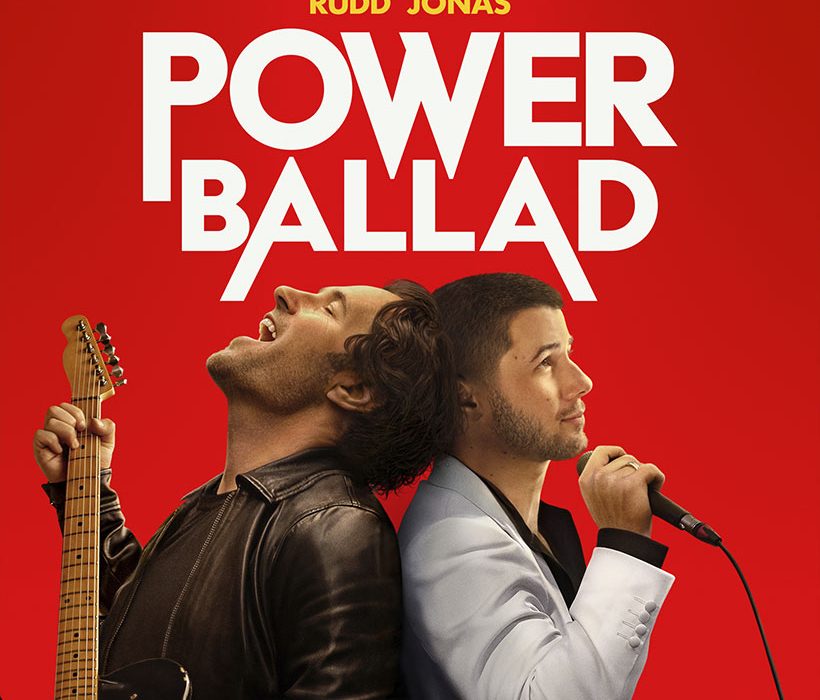
The Price of a Hook: John Carney’s ‘Power Ballad’ Deconstructs Creative Theft in the Modern Pop Machine
The modern music industry operates on a paradox: while technology has democratized the tools of sonic creation, the machinery of global distribution remains fiercely consolidated, commercialized, and driven by metric-centric branding. It is this precise cultural landscape that Irish auteur John Carney interrogates in his latest feature, Power Ballad (2026). Best known for his deeply humanistic, low-budget explorations of musical collaboration—most notably the Academy Award-winning street busker romance Once (2007) and the nostalgic, suburban escapism of Sing Street (2016)—Carney pivots here toward a wider, glossier, and more cynical canvas.
Co-written with Peter McDonald, Power Ballad shifts the filmmaker’s gaze from the organic, rain-slicked alleyways of Dublin to the high-stakes, hyper-stylized arena tours of contemporary pop. Driven by a compelling and deliberately counter-intuitive pairing of Paul Rudd and Nick Jonas, the film functions as a sharp, rhythmically precise dramedy that examines artistic exploitation, mid-life professional disillusionment, and the deep psychological cost of seeking validation from an algorithmic landscape. While the production sacrifices a portion of the unvarnished indie intimacy that established Carney’s reputation, it compensates with a witty, expertly paced script and an analytical eye for how raw art is processed into corporate commodities.
Power Ballad (2026): Comprehensive Production Specifications
For theatrical exhibitors, industry tracking boards, and cinephiles analyzing mid-budget independent-crossover properties, the foundational metadata of Power Ballad highlights a calculated synergy between transatlantic star power and European financing structures.
| Production Metric | Analytical Data and Details |
| Title | Power Ballad |
| Director | John Carney |
| Screenplay | John Carney, Peter McDonald |
| Theatrical Release Date | May 29, 2026 (Limited) / June 5, 2026 (Wide) |
| Running Time | 98 Minutes |
| MPAA Rating | R (for pervasive language and adult thematic material) |
| Lead Cast | Paul Rudd, Nick Jonas, Marcella Plunkett, Havana Rose Liu, Jack Reynor |
| Cinematography | Yaron Orbach |
| Original Music & Songs | Gary Clark, John Carney |
| Production Architecture | 30West, Screen Ireland, Likely Story, Treasure Entertainment |
| Global Distributor | Lionsgate |
Full Narrative Synopsis: The Anatomy of an Intellectual Theft
The narrative foundation of Power Ballad scales a universal, deeply personal creative anxiety into an asymmetric legal and emotional conflict: the absolute misappropriation of an artistic breakthrough.
The Divergent Paths of Rick and Danny
The film begins by establishing the grounded, mildly claustrophobic routine of Rick Power (Paul Rudd). An American ex-patriot and former alternative-rock guitarist, Rick settled in the working-class suburbs of Dublin fifteen years prior after falling in love with an Irish woman, Rachel (Marcella Plunkett). Together, they are navigating the financial pressures of raising a teenage daughter, Aja (Beth Fallon).
To secure domestic stability, Rick fronts “Bride and Groove,” a reliable but soul-crushing local wedding band that spends its weekends delivering sanitized, paint-by-numbers covers of mainstream radio hits to inebriated reception guests. Rick possesses the quiet, heavy-hearted dignity of a musical purist who has bartered his creative ambitions for a steady paycheck, though he harbors a lingering, private compulsion to write original work.
[Rick Power: Acoustic Authenticity ➔ Domestic Grounding ➔ Professional Obscurity]
                                       |
                       [Impromptu Late-Night Jam Session]
                                       |
[Danny Wilson: Synthetic Celebrity ➔ Corporate Isolation ➔ Creative Desperation]
Concurrently, the script introduces Danny Wilson (Nick Jonas), an American pop-star and former boy-band icon whose cultural currency is rapidly evaporating in the face of shifting youth demographics. Paralyzingly insecure, emotionally isolated, and suffering from acute writer’s block, Danny is hiding from the international press in Ireland, attempting to engineer a mature, “authentic” solo record that can save his career from obsolescence.
Following a corporate showcase where Rick’s wedding band handles the unglamorous opening slot, a chance backstage encounter results in an impromptu, alcohol-fueled late-night jam session inside a vacant recording studio. Stripping away their public defense mechanisms, the two men experience a sudden, rare flash of musical synergy. Over several hours, they co-write a raw, emotionally naked ballad, anchored by a haunting chord progression and a specific lyrical hook that Rick had spent a decade quietly developing in his private notebooks.
The Corporate Hijacking
Months later, the organic euphoria of that shared night is shattered. While Rick is continuing his routine on the Dublin pub-and-wedding circuit, Danny’s management team launches a massive, global multi-platform campaign for the pop star’s new comeback single. Rick listens in shock as the radio plays a heavily polished, stadium-ready version of their late-night composition. The track becomes an instantaneous streaming phenomenon, topping global charts and sparking a highly lucrative international arena tour.
However, Rick’s name is entirely absent from the writing, production, and publishing credits. The track is aggressively marketed to the public as a solo, deeply intimate confession written entirely by Danny to document his private struggles with fame. Danny has claimed exclusive authorship, effectively using Rick’s genuine life experiences and emotional marrow to purchase his own cultural redemption.
The Asymmetric War for Legacy
Rick’s initial response is one of naive disbelief, assuming the omission is a simple administrative error that can be rectified with a direct conversation. Instead, he is met by an impenetrable wall of corporate handlers, high-priced entertainment attorneys, and public relations specialists who employ systematically gaslighting legal maneuvers to minimize his contribution. Realizing that Danny has no intention of acknowledging the truth, Rick’s frustration hardens into an all-consuming, scorched-earth crusade to reclaim his legal identity and creative legacy.
As Rick launches his legal and public counter-offensive against Danny’s multi-million-dollar celebrity apparatus, his domestic stability in Dublin begins to fracture. He expends his family’s modest savings on retainer fees and alienates Rachel by prioritizing an abstract concept of professional credit over the immediate well-being of his household. The film’s second half deepens into a psychological tug-of-war, tracking Danny’s escalating panic as his arena tour approaches and Rick’s perilous descent into an obsession that threatens to destroy the actual, tangible life he has built in Ireland.
Technical and Artistic Critique
Direction and Screenplay: A Polished, Dialectical Evolution
John Carney, working alongside Peter McDonald, exhibits his familiar, deeply felt fluency in the language of musical architecture. Carney recognizes that the act of composition—the trial-and-error assembly of lyrics, melody, and rhythm—is intrinsically dramatic when filmed with energy. The film’s centerpiece sequence depicting the spontaneous creation of the title song is masterful, using a fluid, long-take camera style that captures the lightning-in-a-bottle nature of inspiration.
However, Power Ballad demonstrates a marked aesthetic evolution from Carney’s previous output. Working with cinematographer Yaron Orbach, the director abandons the handheld, documentary-style digital textures of Once in favor of a highly polished, widescreen anamorphic presentation. This deliberate visual choice serves the narrative well: it creates a sharp dialectical contrast between the warm, cluttered, shallow-focus domestic spaces of Rick’s Dublin life and the cold, vast, neon-saturated, and alienating geometry of Danny’s arena stages and corporate offices. At times, however, this glossy sheen works against the film, smoothing over the unvarnished emotional stakes and making certain plot transitions feel more akin to a traditional Hollywood studio dramedy than a gritty independent character study.
Performance and Character Interactivity
The dramatic and comedic momentum of the film relies completely on its principal casting choices, which succeed by deliberately playing against established public personas.
-
Paul Rudd delivers a remarkably disciplined, subversively grounded performance that suppresses his signature, effortlessly charming comedic timing. As Rick, Rudd allows an undercurrent of mid-life exhaustion, professional humiliation, and impotent, simmering rage to sit at the surface. He carefully prevents the character from becoming a one-dimensional, saintly victim, portraying instead a flawed man whose search for justice verges on self-destructive monomania.
-
Nick Jonas turns in an exceptionally self-aware, nuanced performance that deconstructs the very nature of real-world pop stardom. Jonas resists the obvious temptation to render Danny as a cartoonish, mustache-twirling industry antagonist. Instead, he infuses the pop singer with an intense vulnerability and a desperate fear of cultural irrelevance, framing the theft of the song not as a calculated act of malice, but as a panicked survival instinct engineered by a man trapped within his own corporate brand.
-
Marcella Plunkett provides the film’s crucial emotional anchor as Rachel. Her performance ensures that the film never devolves into a purely cynical satire of the entertainment industry; she constantly reminds the audience of the real-world human collateral damage caused by the clashing egos of the two central male figures.
Sound Design and Musical Composition
In any musical narrative overseen by Carney, the diegetic music must serve as a primary narrative engine. For the central conflict of Power Ballad to carry dramatic weight, the stolen anthem must be an undeniable masterpiece. The songwriting team of Gary Clark and Carney succeeds completely, crafting a track that convincingly transitions through multiple genres. The audience hears the song evolve from an intimate, acoustic, folk-adjacent skeleton in the Dublin studio to a massive, heavily processed, electronic-pop wall of sound designed for stadiums, perfectly illustrating how raw human experience is distilled and synthesized for mass consumption.
Strengths and Weaknesses
Strengths
-
Subversive Casting Chemistry: The tension between Rudd’s suppressed anger and Jonas’s fragile vanity creates an engaging, unpredictable character dynamic.
-
Authentic Songwriting Representation: The film avoids cinematic clichés regarding musical creation, showing it as a laborious, intimate, and deeply collaborative physical process.
-
Sharp Industrial Satire: The screenplay offers a witty, unsparing critique of contemporary celebrity culture, addressing the modern reliance on curated vulnerability and algorithmic marketing.
-
Tight Editorial Structure: At 98 minutes, the film features an economical, brisk narrative momentum that avoids third-act stagnation or unnecessary subplots.
Weaknesses
-
Diminished Emotional Resonance: The adoption of a sleeker visual style and more traditional studio-comedy pacing prevents the film from achieving the profound emotional gravity found in Once.
-
Convenient Narrative Resolutions: The final act relies on relatively neat, formulaic dramedy tropes to resolve complex legal and familial disputes that the second act had established as deeply toxic.
-
Underdeveloped Supporting Arcs: Compelling secondary actors, including Havana Rose Liu and Jack Reynor, are restricted to functional, underwritten roles that primarily serve to advance the central plot rather than existing as fully realized characters.
Final Verdict
Power Ballad does not quite scale the transcendent, melancholy emotional heights of John Carney’s early masterpieces, but it stands as his most commercially sophisticated, tightly engineered, and flat-out entertaining film in a decade. Powered by an exceptionally mature performance from Paul Rudd and a courageous, self-deprecating turn from Nick Jonas, the film delivers a highly watchable, timely meditation on creative ownership in an era where celebrity equity frequently overshadows genuine craft. It is a resonant, smart crowd-pleaser that firmly understands that while a piece of music can be legally or illegally reassigned, the soul required to conceive it remains entirely uncopyable.
Final Rating: 3.5 out of 5 Stars
Review Schema
{
  "@context": "https://schema.org/",
  "@type": "Review",
  "itemReviewed": {
    "@type": "Movie",
    "name": "Power Ballad",
    "image": "",
    "dateCreated": "2026",
    "director": {
      "@type": "Person",
      "name": "John Carney"
    },
    "actor": [
      {
        "@type": "Person",
        "name": "Paul Rudd"
      },
      {
        "@type": "Person",
        "name": "Nick Jonas"
      }
    ]
  },
  "reviewRating": {
    "@type": "Rating",
    "ratingValue": "3.5",
    "bestRating": "5",
    "worstRating": "1"
  },
  "author": {
    "@type": "Person",
    "name": "Film Critic"
  },
  "reviewBody": "John Carney's Power Ballad is a sharp-witted, highly engaging exploration of artistic ownership and mid-life disillusionment. Featuring exceptional, type-defying performances from Paul Rudd and Nick Jonas, the film effectively balances industry satire with earnest musical drama, even if it trades a portion of Carney's signature indie grit for a glossier studio finish."
}